
Understanding Human–Large Carnivore Systems: Presenting the SESCARNIVORE Project
Greetings from the field. In this short video update, SESCARNIVORE's Principal Investigator Tibor Hartel takes a moment during active fieldwork to present the project's core vision, structure, and current activities. Published on the Natură și Oameni cu Tibi Hartel YouTube channel, the video offers an accessible, first-hand account of what SESCARNIVORE is about and where we stand in Year 2 of the project.
What Is SESCARNIVORE About?
At its core, SESCARNIVORE aims to develop a social–ecological niche framework — a theoretical and empirical tool for understanding how large carnivores (bears, wolves, and lynx) distribute themselves across landscapes shaped by both ecological and human forces. Romania serves as our primary study case, offering a uniquely rich context where large carnivore populations remain relatively intact but increasingly interact with dense human land use.
The project's specific goals include mapping human–wildlife interactions across spatial and temporal scales, assessing the ecological and social drivers behind conflict and coexistence, improving monitoring approaches (notably through camera trap networks), identifying leverage points within governance and institutional frameworks, and ultimately co-designing evidence-based, context-adapted interventions that reduce conflict while maintaining ecological functionality.
"We assume that it should be about landscape complexity — but also local knowledge. People know how to avoid them, and the animals are used to people."
A Three-Year Structure
The project unfolds over three years, each with a distinct focus that builds on the previous one.
Year 1 — Theoretical and Conceptual Grounding. The first year was dedicated to establishing the intellectual foundations of the social–ecological niche framework. This work resulted in two peer-reviewed publications: a review paper situating the project within the existing literature on human–carnivore systems, and a concept paper outlining the theoretical framework that guides all subsequent empirical work.
Year 2 — Three Research Strands. Building on that foundation, the current year is structured around three complementary research strands, operating at different spatial and social scales:
Strand 1 — European Expert Questionnaire
An international survey engaging experts from across Europe, asking them to assess the social–ecological challenges and opportunities of conserving large carnivores in their respective countries. This strand situates Romania's experience within a broader continental context and generates comparative data on governance, conflict, and coexistence across different national settings.
Strand 2 — Participatory Community Workshops
A series of participatory workshops conducted with local communities, aimed at understanding how residents perceive landscape change, shifts in large carnivore behaviour, and how these dynamics affect human–carnivore relationships on the ground. Local knowledge is treated not as background context but as primary empirical data in its own right.
Strand 3 — Camera Trap Monitoring in Cultural Landscapes
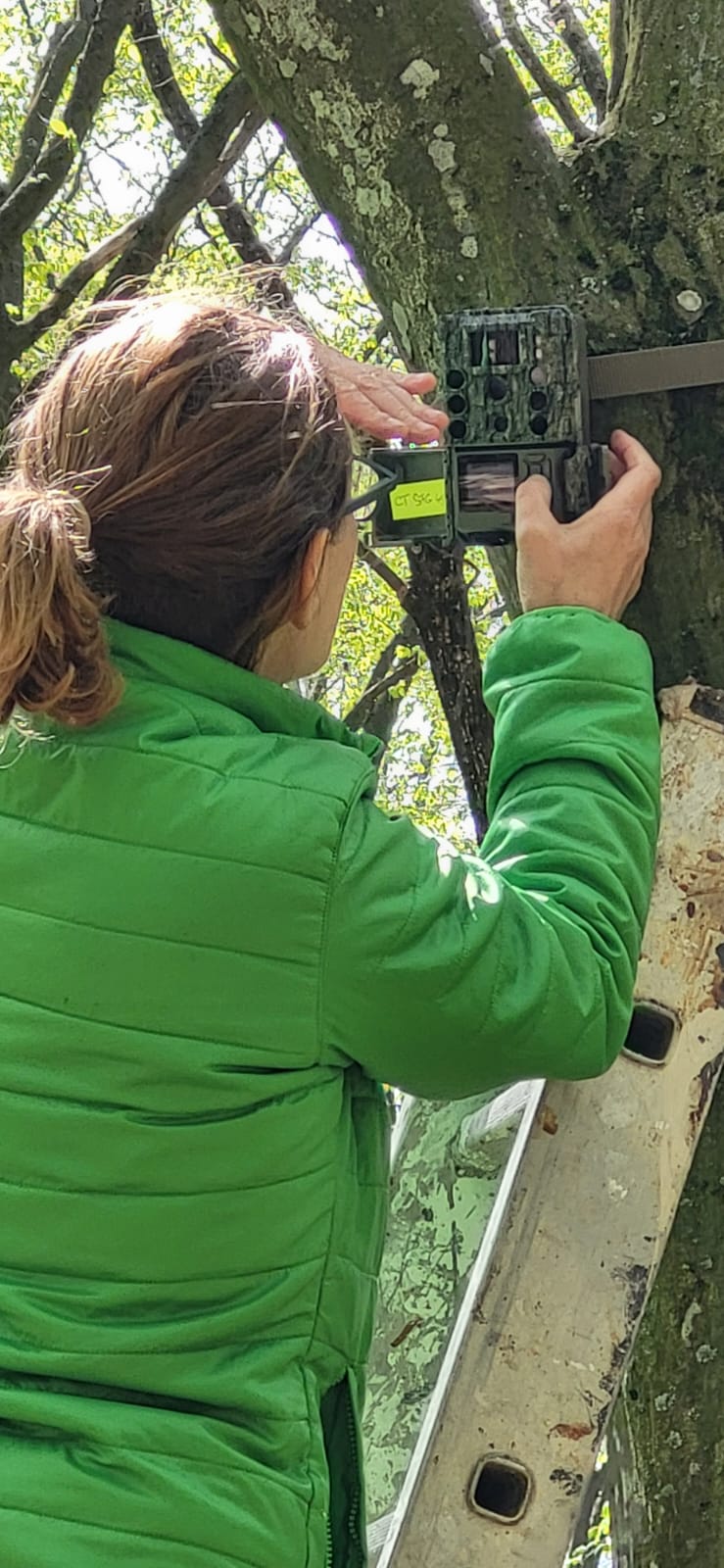
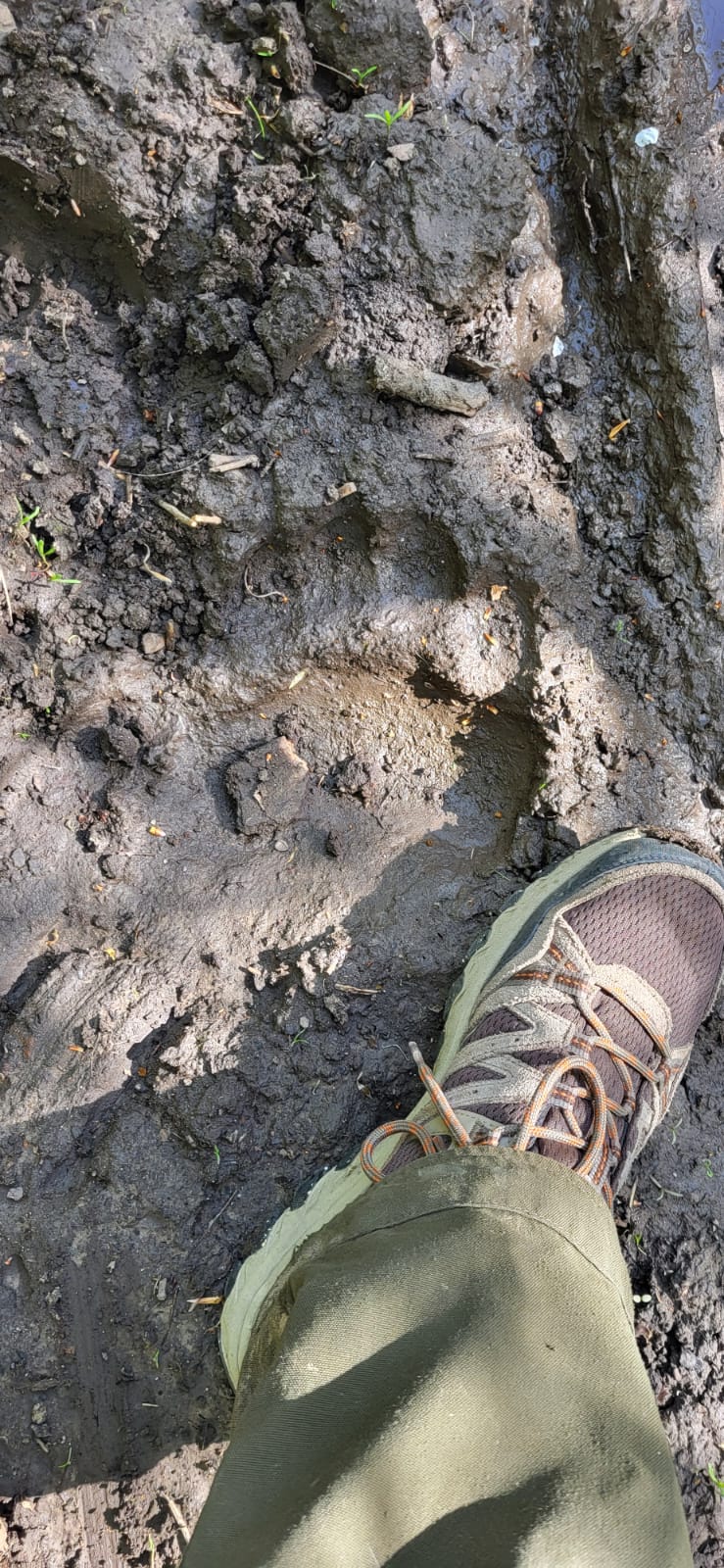
Fieldwork in a densely populated cultural landscape that is simultaneously used intensively by bears and wolves — yet where conflicts and attacks remain remarkably absent. Camera traps are deployed to document movement patterns and land use overlap, helping the team understand what structural and behavioural mechanisms enable this apparent coexistence.
Together, these three strands span from the international to the hyper-local, weaving together quantitative survey methods, qualitative participatory tools, and ecological field monitoring into a coherent, multi-scale research design.

Why Does This Matter?
The central puzzle driving the camera trap strand is deceptively simple: how is it possible that in a landscape so densely shared by people and large carnivores, there are still no conflicts, no attacks? The working hypotheses point to landscape complexity — structural features that naturally buffer direct encounters — and to local ecological knowledge, accumulated over generations of living alongside these animals. Both people and carnivores appear to have learned to navigate the same space without collision.
Answering this question has implications well beyond Romania. If we can identify the mechanisms that allow coexistence in high-density overlap zones, we gain practical tools for managing human–carnivore relationships in comparable contexts across Europe — where rewilding and range expansion are increasingly bringing large predators back into human-dominated landscapes.
Looking Ahead to Year 3
In the final year of the project, the team will move into analysis and publication, integrating findings from all three research strands into a coherent synthesis. The goal is not only to advance scientific understanding of human–large carnivore systems, but to produce practical, policy-relevant insights that can inform conservation governance at both national and European scales.
Watch the full video on the Natură și Oameni cu Tibi Hartel YouTube channel for Tibor's field presentation of the project in his own words.